Story evidence and spoilers
Open after finishing the Dark Shrine Worship Hall
What the game shows. On Hinako's first walk toward Chizuruya General Store, she encounters her friends near houses and streets familiar to her. She later explores the school where their relationships took shape. In the Dark Shrine Path, she meets a masked man who seems to know more about her than she knows about him. Switching between these areas changes which people can give her information and whom she can ask for help.
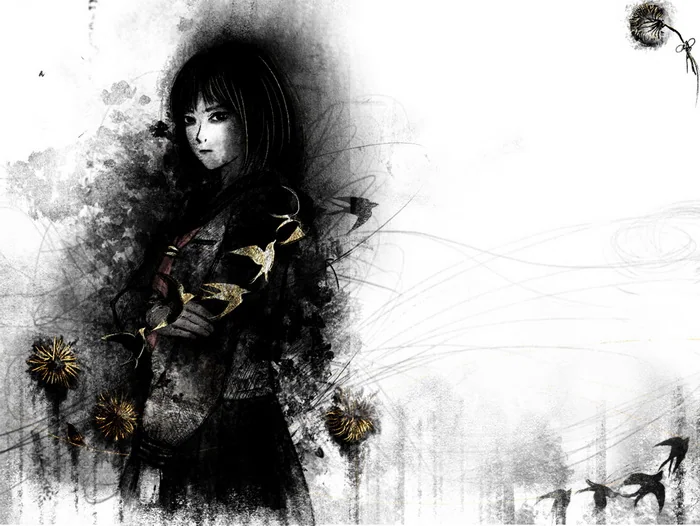
What to reread. At the school, Rinko's letters provide a second view of the friends' relationships. In the Dark Shrine Worship Hall, the northern section contains a Memories Puzzle built around possessions associated with Shu. Its possible objects include his comic, a toy raygun, and a drawing of a younger Hinako. The required objects depend on puzzle difficulty, so your run may foreground fewer of the objects. Shu's character journal gives the same childhood language of being partners that comes up in later conversations.
Interpretation. Childhood represents a period when Hinako could run or play with someone without being constantly asked to imagine her future. The school gives that past a location. The Dark Shrine puts familiar things behind gates and puzzles, so recovering a memory can feel very different from returning to it. On a first run, watch where Shu and Hinako agree on what they remember and where they assume it means the same thing for both of them.
Open after finishing the Shimizu Residence and Treasure Hall
What the game shows. Different visits to the Shimizu Residence let you compare Hinako's writing with household records. One of her diary pages expresses anger at both parents. A separate page by her mother describes her father throwing a knife at Hinako. The Certificate of Full Payment gives a concrete account of the family's settled debts, while a later-route note records her mother's expectation that marrying a wealthy man will ease money worries. Put the financial evidence and the mother's expectations side by side. Each shows a different part of what the household expects from the marriage.
The shrine ritual documents use ceremonial language about welcoming Hinako into another family and remaking her identity. Her changing appearance makes that idea visible. The Dark Shrine Main Hall and Treasure Hall are places to notice which ritual objects mark those changes. The practical question for Hinako is how much she is ready to give up when she accepts someone else's promise of safety or happiness.
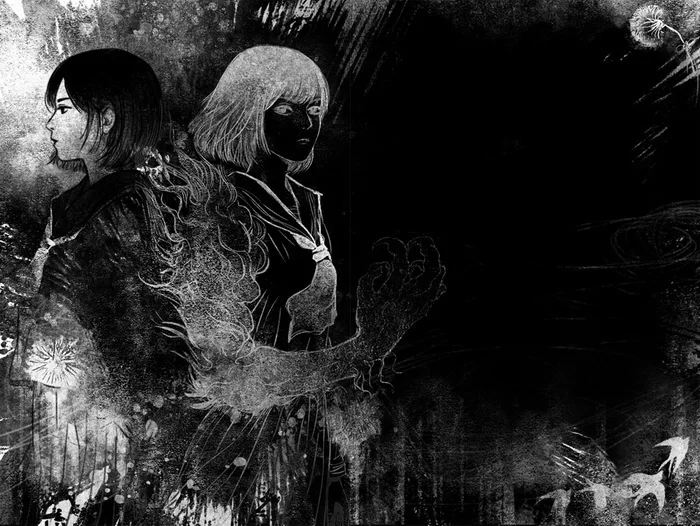
What Hinako says. In her later journal, she describes two versions of herself. One is the Shimizu Hinako she's always known. The other is a Hinako with plans for a different future. The journal presents the latter through the first's fear of losing control of her body and choices. Route-specific entries from Hinako's Diary make different feelings accessible. One expresses fear on the eve of the wedding. Another insists on the right to make a decision despite her parents' motives. A late entry from a different side of the argument describes the wedding as a kind of death.
Interpretation. The two figures make an internal disagreement visible. Hinako has reasons to fear staying in her old role, and reasons to fear what accepting a new one may cost her. The differences between the diary entries help explain why a version of Hinako can speak sincerely even when another version of her says the opposite in another scene. Check which diary page and which route you found before deciding that one line settles how she feels.
Open for major spoilers from the main endings
| Ending | What happens to Hinako's choice |
|---|---|
| Coming Home to Roost | Hinako fights the bridal figure. Police radio then reports a massacre at a wedding and describes a suspect in bridal clothes, shifting how the player reads the events just witnessed. |
| Fox's Wedding | The shrine-side Hinako goes forward with the ceremony. Her conversation with Shu preserves the importance of their friendship, while the final scene gives voice to the side of Hinako that remains terrified of the marriage. |
| The Fox Wets Its Tail | Hinako rejects the wedding and confronts Fox Mask. Her objection centers on having the freedom to determine her own happiness. |
| Ebisugaoka in Silence | Both Hinakos speak, defend their right to decide, and leave the question of marriage open. They each describe what they might want from the future after leaving the shrine. |
In Coming Home to Roost, the radio gives a different age range from the way Hinako is introduced and portrayed throughout the town. It places the report in a distinct frame and gives it the status of a police account. The report and the visible horror support more than one reading of the relationship between the town and the shrine. Subsequent endings give weight to different evidence and develop the supernatural conflict further.
In Fox's Wedding, Hinako's argument with Shu says plainly that she hated being told how a girl should act. The ending tests what it means for her to choose a future when the men around her speak as though she belongs to one of them. The Fox Wets Its Tail takes her objection further. She describes her happiness as a decision she has to make for herself, even when someone else has worked hard to offer her wealth, love, or security.
Ebisugaoka in Silence gives the two sides room to agree that they deserve time. Fox Hinako can imagine proposing one day, on her own terms. The other wants to find something to devote herself to and is still figuring out what that will be. Compare those speeches with her early journal for the change in her voice. She can still value friendship or love while giving herself permission to decide when and whether to act.
Hinako Shimizu is the playable protagonist of Silent Hill f. She's a teenager in Ebisugaoka, a mountain town in 1960s Japan. When the fog reaches the town, she searches for her friends and tries to survive the threats filling streets she already knows. Konatsu Kato portrays Hinako, and Suzie Yeung voices her in English. Konami's cast announcement
Her name also appears as Shimizu Hinako in the game and Konami's materials. Shimizu is her family name and Hinako is her given name. The first section covers her starting relationships. Open later sections when you've reached their listed chapters.
Hinako's starting relationships
Hinako remembers being athletic, spending time with boys, and resisting rules about how she ought to act as a girl. Her character journal names the Track & Field Club, which explains why running matters to her as a source of pleasure and independence. She also sees stubbornness in herself and remembers regretting choices. That self-criticism is there before the supernatural events demand a decision from her.

| Person | Relationship at the opening |
|---|---|
| Shu Iwai | Her childhood friend and self-described partner. Their shared games and jokes give Hinako someone with whom she feels on equal terms. |
| Rinko Nishida | A friend in the same group. Compare what Hinako observes about Rinko early on with the things Rinko writes in private later. |
| Sakuko Igarashi | A friend whose family looks after Sennensugi Shrine. Sakuko takes the town's spiritual stories more seriously than Hinako initially does. |
| Junko Kinuta | Hinako's older sister. Hinako remembers Junko intervening when conflict with their parents made home difficult. |
| Kanta and Kimie Shimizu | Hinako's parents. Her account of the household gives context for why she pays close attention to how people speak for her. |
Hinako is also the writer behind many journal entries. Her phrasing tells you how she understands a person at that point in the story. When an entry and a letter give different explanations for the same relationship, check the writer and chapter before drawing a conclusion. A private letter can reveal a motive the character hasn't voiced, while Hinako's journal shows what she knows about it at the time.
Hinako from Ebisugaoka to the Worship Hall
Open the matching spoiler panel above for the chapter evidence.
Hinako's family and the Dark Shrine rituals
Open the matching spoiler panel above for the chapter evidence.
Hinako across the endings
Open the matching spoiler panel above for the chapter evidence.
